The Red Chair
The room was red because my sister hated red. This was my mother’s explanation when I found it, though by then my mother had been dead for two weeks and the explanation came from a cassette tape labeled FOR WHEN YOU FIND IT.
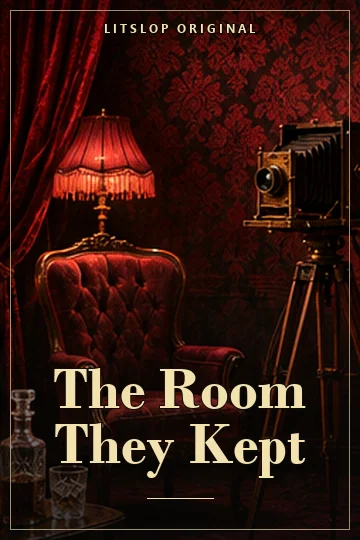
There was a chair in the center of the room, upholstered in velvet the color of raw meat. A camera stood opposite it on a tripod. The wallpaper had once been patterned with gold birds; their wings had faded into scratches. No window opened onto the street. The one in the room looked into darkness, despite the bright afternoon outside.
I had lived in the house until I was eighteen. I knew the loose stair, the cupboard that smelled of onions, the exact place in the hall where my father’s voice became audible before his words did. I had never seen this room. Its door had been hidden behind a wardrobe too heavy for me to move alone. The removal men shifted it and asked whether I wanted the wallpaper stripped. I told them to leave.
The tape recorder was on the chair. My mother’s voice emerged through a hiss. “If you have found this, I did not manage to put everything right.” A pause, a breath. “You had a sister. Her name was Ruth.”
I had a memory of a girl’s hand on the back of my neck, guiding me through a crowd. I had always assumed the hand belonged to my mother. Now the memory shifted. The fingers were smaller; the nail on the little finger was painted blue.
My mother said Ruth was sixteen when she disappeared. The police searched the river, the railway tracks, and the houses of boys she knew. My parents searched the house every night. On the seventh night, they found a photograph on the kitchen table: Ruth sitting in the red chair, looking straight at the camera.
“She wrote on the back,” my mother said. “‘I am still here.’”
The tape clicked off. Beneath the recorder lay a stack of photographs. In each one Ruth sat in the chair, wearing the same school uniform. In the first she looked frightened. In the second she had turned toward the window. In the third she was older, her hair falling over one shoulder. By the last, she was a woman of perhaps forty. She was holding a piece of paper.
I brought the photograph into the hall, where the light was better. The paper said: DON’T LET HIM DEVELOP THE NEXT ONE.
My father had taught me photography. I remembered the chemical smell of the darkroom, the satisfaction of an image rising slowly from white paper. He had died when I was twenty-four, or so I had been told. I had not seen the body. My mother said the accident was too terrible.
The camera in the red room was loaded. I knew because its counter showed one exposure remaining. I put my eye to the viewfinder. The chair was empty, but the room behind it was different: clean wallpaper, bright window, a man standing with his hand on the chair back.
My father smiled at me through the lens.
“Good girl,” he said. “Now take the picture.”
The shutter released beneath my finger before I could pull away. From the chair came the sound of someone drawing a long, ragged breath.
End of the free first chapter. Keep reading in the app · more family secrets